Healthy Oceans. Healthy Communities.
A B C

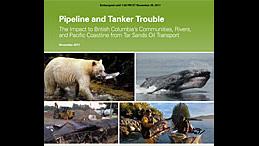
Trans Mountain Pipeline proposal leaves taxpayers liable for 90 percent of marine-based spill response cost

Thursday, January 24, 2013

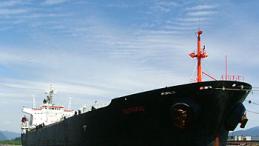
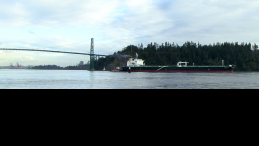
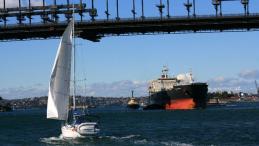
VANCOUVER, B.C. ─ A report released today by four environmental groups warns that Kinder Morgan’s new Trans Mountain Pipeline proposal represents an exponential increase in the risk of a major marine-based oil spill affecting the Salish Sea’s most populous region, including the Cities of Vancouver and Victoria and the Southern Gulf Islands. The report analyses the insurance available to pay for spill response costs and damages caused by such a spill and concludes that Canadian taxpayers could be on the hook for as much as 90 percent of the cost.

Federal government not meeting ocean protection commitments

Tuesday, February 5, 2013

VANCOUVER—A report released today by the Commissioner of the Environment and Sustainable Development supports Living Oceans Society’s contention that the federal government is failing to live up to its international commitments on effective marine protected areas (MPAs) and has left taxpayers exposed to enormous liabilities for oil spills in Canada’s oceans. The report responds to a petition filed by Living Oceans.

Dilbit dithering continues at Enbridge Joint Review Panel hearing

Friday, February 8, 2013

VANCOUVER, B.C. ─ Diluted bitumen won’t exactly sink most of the time but it won’t exactly float all of the time, either, according to new evidence filed with the Joint Review Panel hearing the Enbridge Northern Gateway application in Prince Rupert. In cross-examination by Ecojustice counsel Karen Campbell today, Enbridge consultants admitted that tank test evidence filed this week found dilbit did submerge beneath the surface of the water, although none was found to have sunk to the bottom of the tank.

Conservation organizations question close containment salmon farming report

Thursday, March 7, 2013

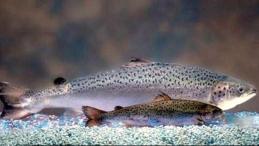
OTTAWA -- Wild salmon advocates from Canada’s east and west coasts are in Ottawa today, and welcome the tabling of the long-awaited Fisheries and Oceans Standing Committee Report on Closed Containment technology. The report has the potential to help foster change in Canada’s salmon aquaculture industry and offer much-needed protection for Canada’s wild salmon, coastal fisheries and the communities that depend on healthy oceans.

Financial Report for Kinder Morgan (French)
Financial Report for Kinder Morgan

Blue carbon

Most people know that trees and other land plants absorb CO2. So do coastal ecosystems. It's called blue carbon.  In fact, coastal ecosystems are up to 2,000 times more efficient than land plants at removing CO2 from the atmosphere. Wetlands store carbon in a stable, solid form in the marine sediments beneath their roots for thousands of years. Unfortunately, these ecosystems are threatened worldwide because of coastal development and pollution.

Climate change

Climate change is one of the greatest challenges facing humanity. On land its impacts are well known: higher temperatures, stronger storms, droughts for some and more rain for others, wildfires and pest outbreaks, etc.

Without the ocean, climate change would be much worse. The ocean absorbs huge amounts of CO2. It’s taken in roughly 25 percent of all CO2 emissions since the late 1700s, and 80 percent of the heat from global warming! This is great for our climate, but it comes at a cost to the ocean. We can expect to see:

Why it matters

Rising ocean acidity reduces the availability of carbonate minerals which are used by thousands of marine species to form shells and skeletons. These “calcifying” organisms – such as corals, shellfish, and tiny marine snails known as pteropods – are important in marine ecosystems from the tropics to high latitudes and the deep sea.

When there is less carbonate available, it is increasingly difficult for these creatures to build their homes and sources of protection. Ocean acidification threatens species throughout the web who feed on these creatures – from salmon to whales.

Pages