Healthy Oceans. Healthy Communities.
A B C

Salmon Farming

New report examines sustainability claims of farmed salmon eco-certifications
Wednesday, April 6, 2011

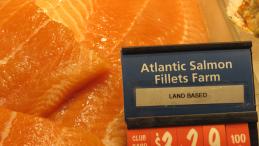
VANCOUVER – Today Living Oceans Society and the Coastal Alliance for Aquaculture Reform (CAAR) released a new report – Better than the Rest? A Resource Guide to Farmed Salmon Certifications. Largely written for retailers, this guide assesses the five eco-certifications on the market, two certifications in draft and the organic labels in use and in development for farmed salmon. Unfortunately all five eco-certifications fail to fully meet the requirements of credible standards.
Mainstream Canada misinforms public on new salmon farm application in the Clayoquot Sound Biosphere Reserve

Wednesday, August 31, 2011

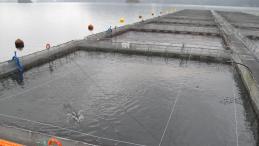
VANCOUVER ─ A new open net-cage salmon farm proposed by Mainstream Canada near Plover Point in the Clayoquot Sound Biosphere Reserve seeks to more than triple the size of the farm it will replace. The company has been characterizing the farm as a “replacement” site for their Cormorant tenure. But after protracted delays, Fisheries and Oceans Canada (DFO) has made existing B.C.

Clark government approves new fish farm in Clayoquot Sound

Thursday, October 11, 2012

Tofino, B.C. – Environmental groups have written an angry letter to Premier Christy Clark for allowing the approval of a new salmon farm site in Clayoquot Sound on the West Coast of Vancouver Island while never addressing serious concerns about diseases from farms impacting wild salmon.

On October 3rd the Province offered Mainstream Canada a 55-hectare salmon farm tenure on the shores of Meares Island, near Plover Point, in the Clayoquot Sound UNESCO Biosphere Reserve.

DFO approves new open net-pen salmon farm in Clayoquot Sound despite ongoing concerns about disease and pathogens

Friday, October 12, 2012

Vancouver, B.C.— The Coastal Alliance for Aquaculture Reform (CAAR) is appalled to learn that on October 10, DFO quietly issued a new aquaculture licence to Mainstream Canada for another open net-pen salmon farm in Clayoquot Sound. The new site is located in Fortune Channel near Plover Point on Meares Island.

Cohen Commission report confirms net-pen farmed salmon is a threat to Fraser River sockeye

Wednesday, October 31, 2012

Vancouver, B.C.— Living Oceans Society is pleased to hear a number of the Conservation Coalition recommendations were adopted by the Cohen Commission, reinforcing the concerns of DFO’s mismanagement and the serious threat of net-pen salmon farms on the British Columbia coast. The Cohen report is further proof that a transition away from an open-net pen salmon farming to closed containment is needed immediately.

Conservation organizations question close containment salmon farming report

Thursday, March 7, 2013

OTTAWA -- Wild salmon advocates from Canada’s east and west coasts are in Ottawa today, and welcome the tabling of the long-awaited Fisheries and Oceans Standing Committee Report on Closed Containment technology. The report has the potential to help foster change in Canada’s salmon aquaculture industry and offer much-needed protection for Canada’s wild salmon, coastal fisheries and the communities that depend on healthy oceans.

The Fallacy of “Organic” open net-pen farmed salmon

Canadian "organic" farmed salmon began appearing on supermarket shelves and restaurant menus in 2013, thanks to the Canadian General Standards Board's (CGSB) May 2012 release of the Canadian Organic Aquaculture Standard, sponsored by Fisheries and Oceans Canada (DFO). 


While some types of farm-raised seafood (such as farmed shellfish) follow more stringent guidelines to protect the health of our oceans, the "organic" salmon farming standard varies little from conventional open-net cage practices.


Industrial fish meal and fish oil fisheries

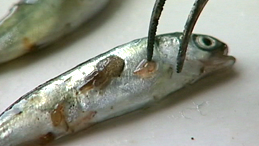
Fishing to feed farmed salmon is taking food away from people and the oceanic food web.

Salmon require other fish in their diet and right now, farming salmon uses more fish protein than it produces. It takes more than one kilogram of wild fish to grow one kilogram of farmed salmon. Farmed salmon is a luxury food not intended to combat global hunger and some scientists claim it would be better to feed the fish being used to make salmon feed directly to hungry people.

Pages