Océans en santé. Communautés en santé
A B C

Salmon Farming

Salmon farm companies seek massive expansion of current open net-cage production sites
Wednesday, November 19, 2008

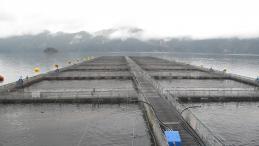
Vancouver, B.C. – The Coastal Alliance for Aquaculture Reform (CAAR) has learned that fish farm companies are seeking approval to roughly double current licensed production on several farms in critical wild salmon migration routes such as the Broughton Archipelago and the northern Georgia Strait. This follows a provincially imposed moratorium on expansion into northern B.C. On a site- by-site basis, some farms could triple, quadruple or increase six-fold their current licensed production levels.
Conservative Government’s economic stimulus package may cost Canada the health of the environment

Thursday, January 22, 2009

SOINTULA, B.C. ─ The Conservative government is using Canada’s struggling economy as an excuse to put our environment at risk, claims Living Oceans Society, a marine conservation organization based in British Columbia. Regulations that are currently proposed for inclusion in next week’s federal budget will exempt all projects valued at less than 10 million dollars from the Environmental Assessment process.

Emergency closure of five open net-cage salmon farms required to protect migrating salmon

Tuesday, June 16, 2009

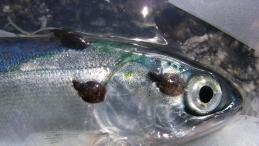
Vancouver, B.C. – Five open net-cage salmon farms must be permanently removed from a salmon migration route in the northern Georgia Strait in order to protect thousands of juvenile salmon from sea lice and other potentially fatal diseases, the Coastal Alliance for Aquaculture Reform said Tuesday.

“The Wild Salmon Narrows, along the east and north side of Quadra Island, is a significant migration route for juvenile wild salmon from local rivers, the Fraser River, and in all likelihood, Washington and Oregon runs as well,” says Ruby Berry of Georgia Strait Alliance.

Research indicates lower levels of sea lice in 2009 in Broughton Archipelago

Wednesday, July 22, 2009

Sointula and Campbell River - Preliminary results from the joint Coastal Alliance for Aquaculture Reform (CAAR) and Marine Harvest Canada (MHC) sea lice monitoring program in the Broughton Archipelago indicate that sea lice levels in 2009 on juvenile pink and chum salmon migrating through the region are lower than in recent years.

Campbell government’s failure to create green aquaculture jobs, abdication of authority leads to new opportunity for the Feds

Friday, September 11, 2009

VANCOUVER, SOINTULA, B.C. - Very quietly, with no announcement and no media release, the Government of British Columbia has just relinquished regulatory control of marine fin-fish aquaculture in B.C., handing over jurisdiction to the federal government. Living Oceans Society regards the Province’s abdication as an opportunity for significant change and progress on sustainable aquaculture. 


Huge salmon farm escape reinforces urgent need for action on closed containment

Friday, October 23, 2009

SOINTULA, B.C. – Just days after the Norwegian government reported a 380 percent increase in escapes from open net-cage fish farms over this time last year, Marine Harvest Canada has admitted to another mass escape of approximately 40,000 farmed salmon in the beleaguered Broughton Archipelago.

DFO reverses decision on salmon farm expansion

Wednesday, March 17, 2010

VANCOUVER – Facing the threat of a lawsuit from environmental groups, Fisheries and Oceans Canada (DFO) has withdrawn its approval authorizing the expansion of the Doyle Island salmon farm near Port Hardy, B.C. The project, which sought to expand production at the facility by 37 percent, will now undergo an environmental assessment which will examine its impacts on wild salmon stocks and the health of the ocean. 

Proposed Canadian Organic Aquaculture Standard opposed by over 40 North American organizations

Tuesday, August 31, 2010

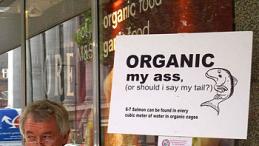
VANCOUVER, B.C. – Over 40 organizations from across Canada and the U.S. submitted a joint letter opposing the Canada General Standards Board (CGSB) proposed organic standards that allow antibiotic and chemical treatments of farmed fish. The signatories reflect a broad cross section of the scientific, conservation, consumer, and organic communities, and represent a collective membership of over one million people. The CGSB period for public comment closed yesterday and a revised draft of the standard will soon be released.

Parliament under pressure to stop genetically modified fish: Motion in the House of Commons requests transparency

Thursday, March 3, 2011

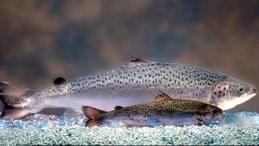
OTTAWA - Today in the House of Commons, New Democratic Party Fisheries and Oceans Critic Fin Donnelly tabled a motion asking for transparency and more study before genetically modified (GM) Atlantic salmon are approved for human consumption.

US company AquaBounty has genetically modified a faster growing Atlantic salmon by inserting a growth hormone gene from Chinook salmon and genetic material from ocean pout.

Pages