
Healthy Oceans. Healthy Communities.
A B C

Ocean Ecosystems

Federal government takes a big step forward to protect the Pacific coast of Canada
Tuesday, June 8, 2010

OTTAWA - Living Oceans Society welcomes today’s announcement by the Minister of Fisheries and Oceans that the ancient glass sponge reefs on Canada’s Pacific coast are one step closer to receiving permanent protection.

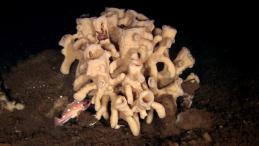
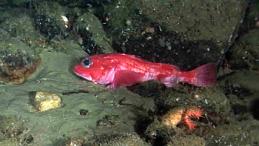
“Last summer I experienced the glass sponges first hand while exploring the deep sea in a submarine and I saw the crabs, fish, and shrimp that made these sponges their home,” says Jennifer Lash, Executive Director, Living Oceans Society. “There is no doubt in my mind that protecting these sponges is a critical step forward towards ensuring a healthy ocean.”
Environmentalists and bottom trawl industry develop innovative measures to improve fishery

Wednesday, March 28, 2012

Vancouver, B.C.— For decades, British Columbia environmentalists have clashed with the groundfish bottom trawl fishing industry, but the two have come together to find common ground, and fragile ocean habitat is the big winner. The two groups have developed innovative measures to conserve corals, sponges and deep-sea habitats. These new management measures have been implemented through Fisheries and Oceans Canada’s Groundfish Integrated Fisheries Management Plan.

New management measures protect deep-sea habitat, put B.C. bottom trawlers on the road to sustainability

For decades, environmentalists in British Columbia have clashed with the province’s groundfish bottom trawlers over the damage that the industry has caused ocean habitats. But in March 2012, both sides came together to forge ahead on this issue, and fragile ocean habitats are the big winner. 

Living Oceans Society and the David Suzuki Foundation developed innovative management measures in a collaborative effort with the B.C. bottom trawl fleet. These measures conserve corals and sponges, and reduce the fishery’s impact on deep-sea habitats.

Creating an ecosystem-based management plan

What is ecosystem-based management? Basically, it's a way of managing human activities that takes into account our cumulative impacts on ocean biodiversity, habitat, food webs, and water quality.

This is a new approach to doing things in the ocean - until now, we've only worried about our impacts on a handful of valuable species.

With ecosystem-based management, our scope is broadened to include non-commercial species, deep-sea corals and sponges, and so on.

Glass Sponge Reefs

Beneath Canada’s North Pacific waters lies a globally-unique biological treasure: glass sponge reefs. These sponge reefs are made from tiny glass spicules (needle-like skeletal elements), and were thought to have gone extinct during the Cretaceous period 145.5 to 65.5 million years ago. Scientists were very surprised when sponge reefs were discovered in Hecate Strait in 1987.

Ocean Ecosystems

Each day that we are alive, we literally live and breathe the ocean.

It doesn't matter where you live or what you do. If you are presently alive on the planet Earth, your life is inextricably intertwined with the ocean.

The ocean is present in the patterns of weather that we've come to expect, the supplies of fresh water that nourish our crops and reservoirs, and the seafood that is so important to so many. It is the source for half of the oxygen that you breathe.

Pages