
Healthy Oceans. Healthy Communities.
A B C

Salmon Farming

DFO approves new open net-pen salmon farm in Clayoquot Sound despite ongoing concerns about disease and pathogens
Friday, October 12, 2012

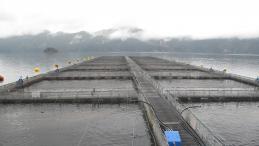
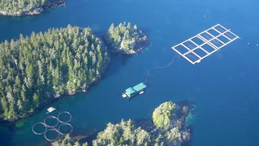
Vancouver, B.C.— The Coastal Alliance for Aquaculture Reform (CAAR) is appalled to learn that on October 10, DFO quietly issued a new aquaculture licence to Mainstream Canada for another open net-pen salmon farm in Clayoquot Sound. The new site is located in Fortune Channel near Plover Point on Meares Island.
Cohen Commission report confirms net-pen farmed salmon is a threat to Fraser River sockeye

Wednesday, October 31, 2012

Vancouver, B.C.— Living Oceans Society is pleased to hear a number of the Conservation Coalition recommendations were adopted by the Cohen Commission, reinforcing the concerns of DFO’s mismanagement and the serious threat of net-pen salmon farms on the British Columbia coast. The Cohen report is further proof that a transition away from an open-net pen salmon farming to closed containment is needed immediately.

Conservation organizations question close containment salmon farming report

Thursday, March 7, 2013

OTTAWA -- Wild salmon advocates from Canada’s east and west coasts are in Ottawa today, and welcome the tabling of the long-awaited Fisheries and Oceans Standing Committee Report on Closed Containment technology. The report has the potential to help foster change in Canada’s salmon aquaculture industry and offer much-needed protection for Canada’s wild salmon, coastal fisheries and the communities that depend on healthy oceans.

The Fallacy of “Organic” open net-pen farmed salmon

Canadian "organic" farmed salmon began appearing on supermarket shelves and restaurant menus in 2013, thanks to the Canadian General Standards Board's (CGSB) May 2012 release of the Canadian Organic Aquaculture Standard, sponsored by Fisheries and Oceans Canada (DFO). 


While some types of farm-raised seafood (such as farmed shellfish) follow more stringent guidelines to protect the health of our oceans, the "organic" salmon farming standard varies little from conventional open-net cage practices.


Industrial fish meal and fish oil fisheries

Fishing to feed farmed salmon is taking food away from people and the oceanic food web.

Salmon require other fish in their diet and right now, farming salmon uses more fish protein than it produces. It takes more than one kilogram of wild fish to grow one kilogram of farmed salmon. Farmed salmon is a luxury food not intended to combat global hunger and some scientists claim it would be better to feed the fish being used to make salmon feed directly to hungry people.

Genetically modified salmon

In industrial agri-business one way to increase profits is to reduce costs. Faster growth from altering an animal’s genetic material is one way to do that. But genetic engineering raises complex questions for ecosystems and consumers. Genetically modified (GM) salmon were patented by Canadian scientists who took a gene that regulates growth hormones in Pacific Chinook salmon and a promoter—the equivalent of a genetic 'on-off' switch—from an ocean pout and introduced them into the genetic structure of an Atlantic salmon.

Human health: Fish is good for you but there are differences between farmed and wild salmon

A CTV News Investigation (2010) compared wild and net-cage farmed salmon and found that wild salmon are more nutritious than farmed with eight times more Vitamin D and three times more Vitamin A per 100 gram serving. The study also noted that farmed salmon are fattier which means they may have more omega-3s, but it also means they can accumulate higher levels of toxins such as PCBs. Studies have found higher levels of these harmful chemicals in farmed salmon in some regions than in wild salmon.

Escapes: Net-pens are poor containment structures and escaped farmed salmon can compete with wild salmon for food and spawning habitat

Nets can tear and when they do, farmed salmon escape through the holes. Over one million farmed salmon escaped into B.C. waters between 1987 and 1996. Efforts to improve the situation have met with only marginal success. In 2008, 111,000 farmed salmon were reported to have escaped from salmon farms in B.C.

Predator interactions: What may look like a free lunch could end up being the last meal

Salmon farms attract wild species both large and small which are looking to find a meal. But this attraction can be fatal for the predators that are drawn to the fish inside in open net-pen. Even though it is illegal in B.C. to shoot a marine mammal, salmon farmers are routinely permitted to shoot ‘nuisance’ harbour seals and California sea lions around their farms.

Sea lice and pesticides: Chemical warfare in open net-cage fish farms

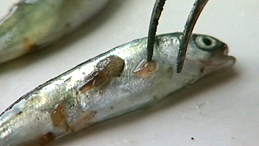
Parasites occur naturally in the wild, but confining large numbers of farmed salmon in open net-pens over long periods of time creates artificial environments for parasites like the sea louse to multiply and spread. Their eggs are dispersed by the currents and can travel freely into and out of net-pens. Many salmon farms are located in more sheltered areas of the coast that are important migration routes of wild salmon.

Pages